
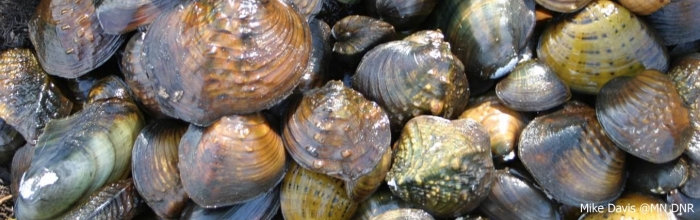
Welcome to The Show Us Your Mussels Challenge

YOU and your students can help our native freshwater mussels. Become a freshwater mussel advocate! Last year the students reached over 64,000 community members!

Minnesota middle and high school students! We need you to create original Community Based Social Marketing campaigns educating the public about the importance of native mussels, the impact of water quality has on them, and what simple, positive actions we need to take to ensure their survival. Participating schools will showcase their work here at the Zoo at a poster symposium. A few motivated schools, who have the highest community reach will receive this field trip for free! This includes bussing, Zoo admission for those participating students and any adult chaperones (as per student/adult ratios), and parking.

The Challenge occurs twice a year – select the Fall Session or the Spring Session.

Need assistance jump starting your lesson? All participating schools receive support from the Zoo’s mussel education staff including professional development, access to resources and curriculum, and school visits. For more information see the Frequently Asked Questions below or email us at digitalmussels@mnzoo.org.


REGISTRATION FOR THE 2026-2027 CHALLENGE is OPEN! Please fill out the form to register.

    To register for the Show Us Your Mussels Challenge, simply complete this form.

    Name*

    School Email*

    Summer Email*

    School Name*

    Grade*

    Subject*

    Estimated Number of Students*

    Our school plans on participating in the*


    Free Professional Development

    Virtual Teacher Training (90 minutes, on-demand viewing)

    Watch the Show Us Your Mussels Virtual Teacher Training videos to learn more about native freshwater mussels, water quality, and the Minnesota Zoo and DNR’s important mussel conservation work. This training is self-guided, allowing you to access the information at the time and place that works for you. The training is divided into 9 different short videos so you can pick which topics work for you.

    To watch this asynchronous training, simply click on the following link to our YouTube playlist at: https://youtube.com/playlist?list=PLM4y6zy8KyFM5jn6OF-FoXTkdynPs5N6z

    NOTE: Coming soon – we are in the process of updating the videos.

    Frequently Asked Questions
    Minnesota Middle and High School students creatively put together an original Community Based Social Marking campaign informing the public about the impact of water quality on native mussels and inspire positive action to conserve them and protect our waters. This real world experience combines science, language, communication skills, data collecting and presenting their results.

    Once developed, the campaigns go live for only 1 month. It is during this time active marketing and data collecting will count towards the free field trip.

    Then all participating schools compile important elements of their project into a poster and present here at the Minnesota Zoo to staff and visiting guests. The top community-reaching schools win this field trip for FREE!   The free field trip includes bussing, Zoo admission for participating students, adult chaperones (as per student/adult ratios), and parking.

    Almost half of Minnesota’s native freshwaters mussels are threatened or endangered. This project provides an opportunity to talk about these unique species while also addressing water quality in our area and seeking solutions. It has interwoven core curricula elements and an element of community service and local engagement.

    By participating in real-world campaigns, students can effectively highlight their science research projects and the scientific process. This hands-on approach helps them learn to cite evidence, communicate creatively, and increase their content knowledge and overall learning goals.

    The project can be implemented to address the following benchmarks:

    • Minnesota Science Standards related to:
      • System Relationships
      • Changes in Ecosystems
      • Humans Effects on Ecosystems
      • Decisions and Health
      • Impact of Chemical Technology
    • Advanced Placement Environmental Science (APES)
      • Earth Systems and Resources (10%–15%)
        • Global Water Resources and Use
      • The Living World (10%–15%)
        • Ecosystem Structure and Diversity
        • Natural Ecosystem Change
      • Pollution (25%–30%)
        • Pollution Types
        • Impacts on the Environment and Human Health
        • Economic Impacts
      • Global Change (10%–15%)
        • Loss of Biodiversity
    • Minnesota English Language Arts related to:
      • Comprehension and Collaboration
      • Presentation of Knowledge and Ideas
      • Media Literacy
    • International Society for Technology in Education (ISTE) standards related to:
      • Digital Citizen
      • Knowledge Constructor
      • Creative Communicator
    • Yes! To access our Free Downloadable curriculum, click here.
    If you are interested in us coming to your school to talk about the project and the information that the Zoo is doing in mussel conservation, we would be happy to visit if we are available. For more information, please email us at digitalmussels@mnzoo.org.
    Your students design and develop an effective campaign advocating the importance of freshwater mussels, our impact on their survival, and what we need to do to ensure their survival. Past campaigns included digital media; online videos, posters, seminars, websites, and various social outreach methods. We currently have specific resources that have been developed to support teachers in developing and tracking YouTube videos, websites and Instagram campaigns.

    Important!  All campaigns must encourage community members to take some kind of action to improve water quality and conserve native mussel populations. In addition, all campaigns must collect and report their data on community reach and obtaining their objectives.

    Projects may be created by individual students or in small groups, it does not matter how many campaigns are active, but each group is responsible for collecting their data and reporting it.  The top schools with the highest community reach will be awarded and recognized at the poster symposium at the MN Zoo.

    This year we would like students to focus on the following actions to improve water quality:

    Pet Waste
    Pet waste that washes off lawns and parks during rain and snow melt events contribute to harmful bacteria and nutrient contamination of our river water. Impaired water can become so bad that swimming is not recommended within 48 hours of a rainstorm. Help prevent this by always carrying bags to pick up pet waste and disposing of them in the trash or flush it down the toilet without the bag.

    Boating & Fishing, Clean in Clean Out
    Invasive zebra mussels that harm our native mussels attach to boat docks and boat hulls. If you use a boat, you can help prevent the spread of zebra mussels by removing all aquatic plants from the boat and trailer, draining all of the water from your boat and bait bucket, never dipping a bucket into a lake if the bucket contains water from another lake, and allowing your boat and trailer to dry in the sun for at least five days before using them in other waters.

    Reduce Salt Use
    The salt we put on our roads, sidewalks and driveways are not only melting the ice, but the excess eventually runs into our lakes and streams raising the overall salinity of our freshwater ecosystems. This increase in salinity is deadly to our mussels as well as to our fish, amphibians, and other aquatic species. Reduce the amount you use and sweep up any excess that remains. Save and reuse it for another day.

    Schools selected to receive the field trip for free will be selected based on the cumulative number of people reached by the campaign.

    As part of the project, students will be responsible for keeping track of how many people they reach through the campaign and citing their evidence. This will mean documenting all engagements such as likes, follows, shares, number of participants, QR code downloads, etc. and report back to the Zoo. Each student group will complete a reflection survey which describes their project, their measurable objectives, if they met those objectives and their final community reach number.

    The 2026-27 school year will have a Fall and Spring Challenge with campaigns active for data collecting in mid-October/mid-November and February. The poster symposiums at the Zoo are scheduled for December 10, 2026 (Fall) and April 29, 2027 (Spring).

    Fall Challenge 2026 registration deadline: September 15, 2026

    Spring Challenge 2027 registration deadline: December 31, 2026

    To register, fill out the simple form at the top of this webpage or email your name, name of school, grade level, number of students participating and what Challenge you would like to participate in to digitalmussels@mnzoo.org.

    Participants from the schools with the highest community reach will receive a FREE field trip to the Minnesota Zoo including bussing, parking and admission to participate in the poster symposium.

    We plan on announcing the winners 4-6 weeks prior to the poster symposium so students have time to prepare their posters and field trips can be planned.

    It depends on the Challenge you participate in.  The poster symposiums are held:

    • December 10, 2026, for 2026 Fall Challenge
    • April 29, 2027, for the 2027 Spring Challenge.
    Important Dates 
    Year Round Registration open for the Challenges
    September 15, 2026 Registration closes for the 2026 Fall Challenge
    October 12-November 8, 2026 Fall Challenge campaigns are live. Data can be collected
    November 13, 2026 Reflections and community reach evidence due to MN Zoo
    November 16, 2026 School Results Announced
    Be sure to register for your field trip on December 10, 2026
    December 10, 2026 Show Us Your Mussel Poster Symposium at the MN Zoo
    December 31, 2026 Registration closes for the 2027 Spring Challenge
    February 2027 Spring Challenge campaigns are live. Data can be collected
    March 8, 2027 Student reflections and community reach evidence due to MN Zoo
    March 12, 2027 School Results Announced
    Be sure to register for your field trip on April 29, 2027
    April 29, 2027 Show Us Your Mussel Poster Symposium at the MN Zoo