Tufted Deer
Elaphodus cephalophus
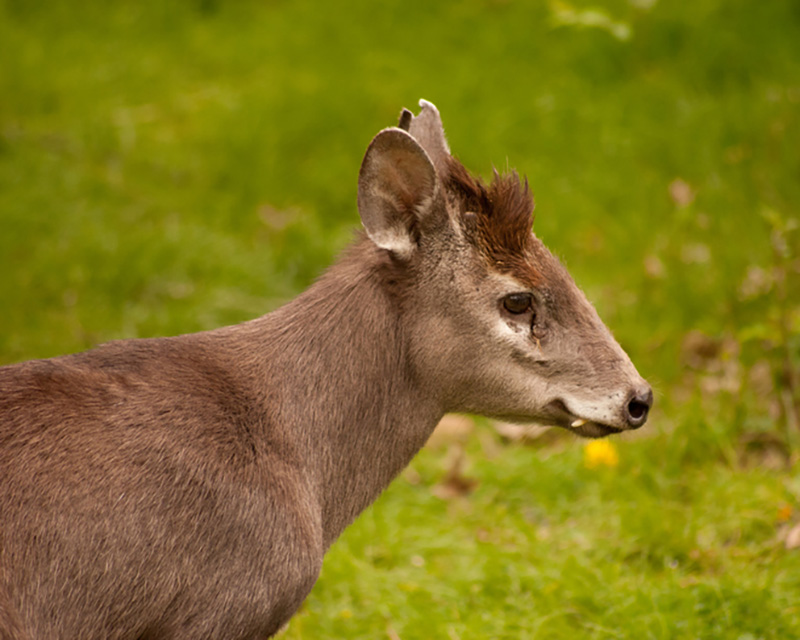
Tufted deer are named after the thick tuft of dark hair on top of their head. Tiny antlers hide under the tuft in males. Although they are more prominent in males, both sexes have fang-like canines which are used for display, combat, and defense.
What They Eat
Tufted deer browse on leaves, twigs, shoots, flowers, fruits, grasses, and other plant parts. Just like all ruminants, they chew and partially digest, then re-chew and digest their food.
Where They Live
Tufted deer live in mid-high elevation, damp mountain forests of China. In parts of their range, they are found at lower elevations and even in open areas. They tend to stay close to water.
What They Do
These secretive deer live alone or in pairs. They use well-worn trails to move through their habitat. Tufted deer communicate with scent and a variety of vocalizations including barks, clicks, whistles, and whines.
How They’re Doing
This species is not well-studied. The tufted deer population is thought to be decreasing, with hunting being the greatest threat. Habitat loss is also a concern.
Where in the World
Asia
Habitat
Mountain forests and surroundings
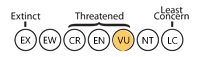
Conservation Status
Animal Facts
Body Length: 40 - 60 inches
Weight: 37.5 - 66 pounds
Shoulder Height: 20 - 28 inches
Number of offspring: 1 - 2 fawns
Taxonomic Category
Mammal
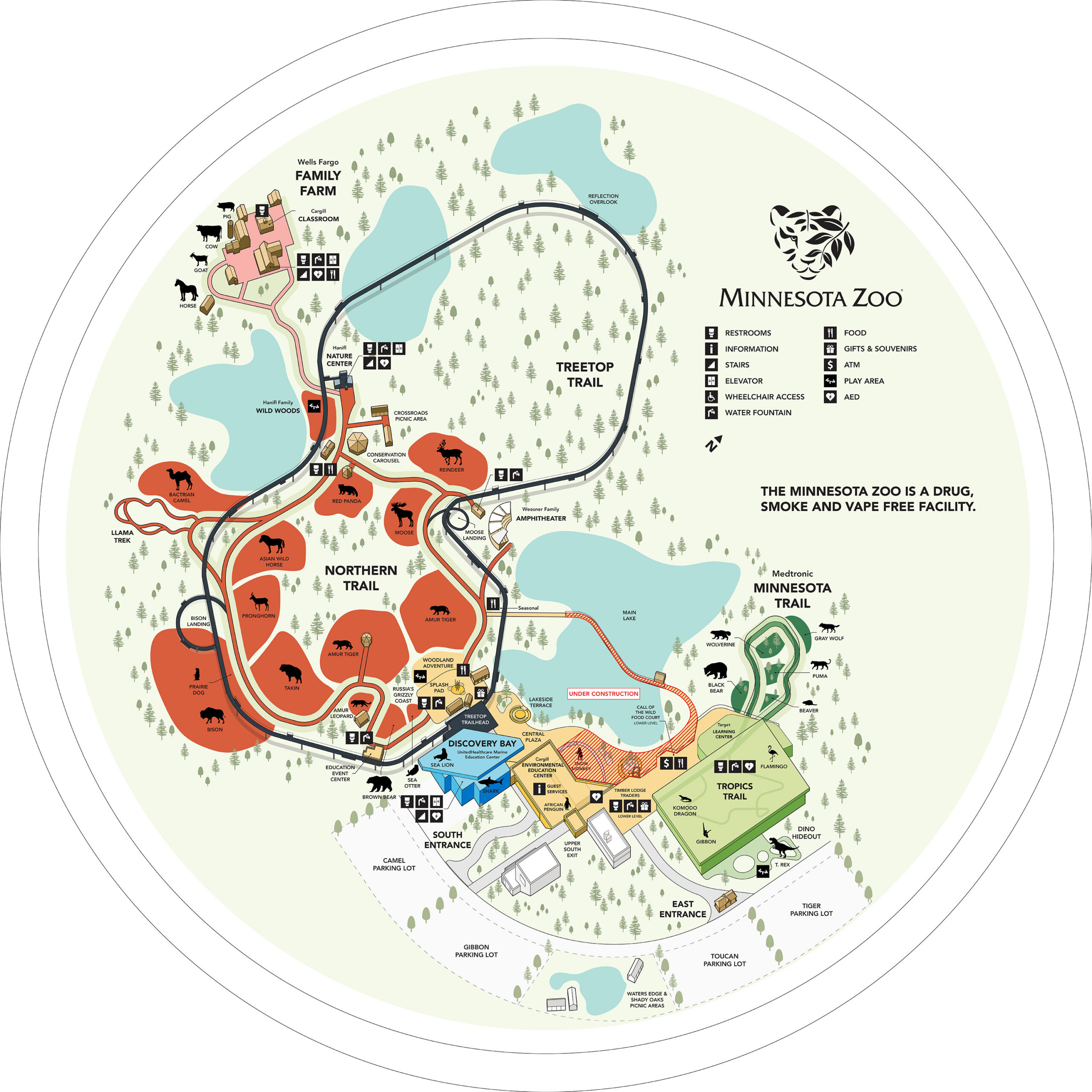
Where at the Zoo
Northern Trail
- Depending on the scientific source, there are three or four recognized subspecies of tufted deer.
- Historical records show tufted deer once ranged as far north as Myanmar. However, several recent searches have failed to find the species there.
- Tufted deer aren’t the only ones with visible fang-like canines. Other “fanged deer” include muntjacs, water deer, and musk deer.
- One interesting hypothesis to explain the tiny antlers and large canines in tufted deer is that fangs serve the same purpose as antlers, yet are much less likely to get tangled in the thick vegetation of this deer’s habitat. Over time, the antlers may have become reduced while the fangs became larger.
- When fleeing danger, tufted deer make strong cat-like jumps. Similar to our local white-tailed deer, tufted deer also raise their tail when running, revealing its white underside.