Seadragons – Weedy & Leafy
Phyllopteryx taeniolatus and Phycodurus eques
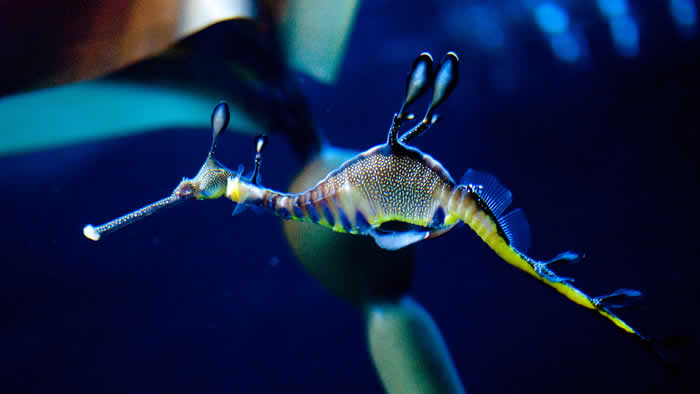
Both the weedy seadragon (Phyllopteryx taeniolatus) and leafy seadragon (Phycodurus eques) are close relatives of seahorses. Seadragons have extra decorative fins that help them blend with the floating seaweed in which they live.
What They Eat
The small size of the seadragon’s snout limits the food it can eat. Seadragons eat tiny sea creatures, mostly shrimp-like animals called mysids. They may suck in as many as 1,000 mysids in a day.
Where They Live
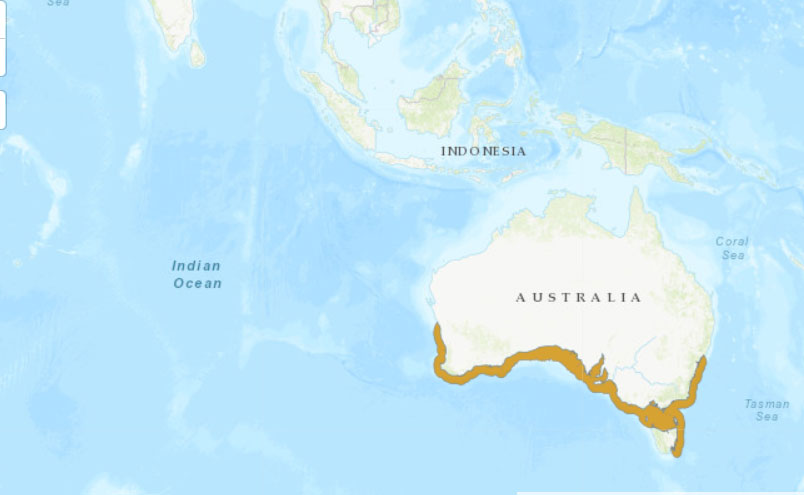
Seadragons exist in only a very small part of the earth’s oceans, relying on particular kelp (seaweed) forests off the southern coast of Australia.
What They Do
Seadragons swim slowly with nearly invisible movements of their fins but mostly go with the flow of the water among the sea plants they resemble.
How They’re Doing
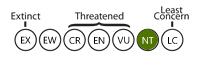
Seadragons came close to disappearing in the 1990s due to pollution and habitat loss. Since 1999, Australia has officially protected these species, although their numbers are still thought to be decreasing.
Where in the World
Leafy Seadragon map
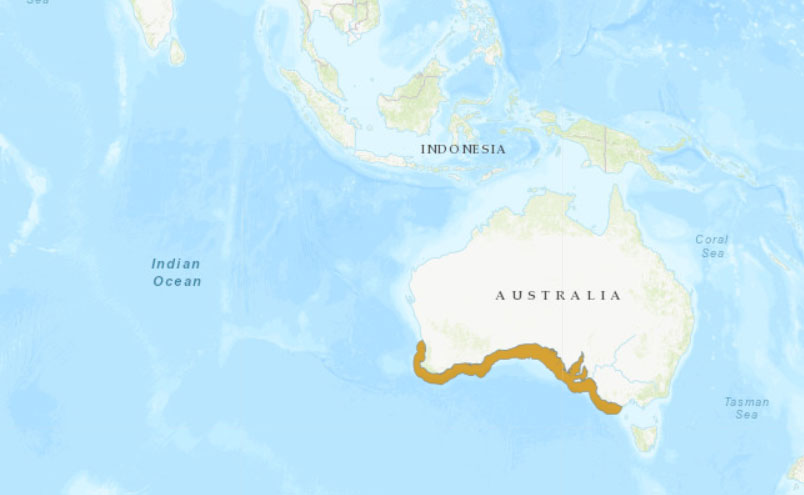
Weedy Seadragon Map
Habitat
Ocean
Conservation Status
Animal Facts
Length: Weedy up to 18 inches; Leafy up to 13.5 inches
Taxonomic Category
Fish
Where at the Zoo
- Seadragons are extremely delicate. They can be injured even by the simple touch of a human hand.
- When seadragons need additional camouflage, they clump together in a group that looks like a floating mat of seaweed.
- As with other members of the seahorse family, male seadragons carry fertilized embryos.
- Unlike seahorses, seadragons cannot use their tail for gripping.
- The leafy seadragon is the official fish emblem for the state of South Australia. The species is a major attraction of the local dive industry.