Poweshiek Skipperling
Oarisma poweshiek
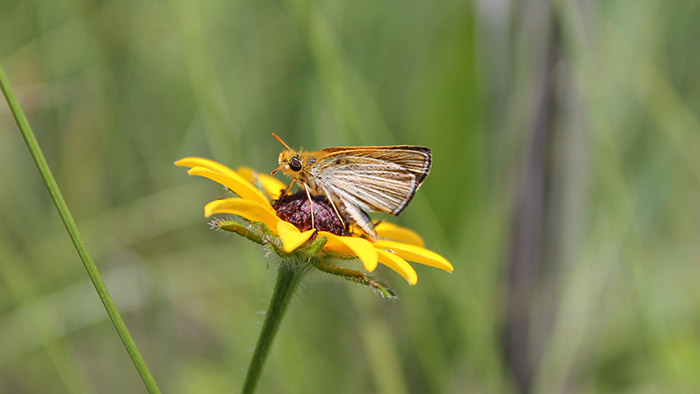
The Poweshiek skipperling is a small orange and brown butterfly that was once abundant in Minnesota’s tallgrass prairie.In the last two decades there has been a population collapse of the Poweshiek skipperling. There has not been a confirmed sighting in Minnesota since 2008 (at the latest), even where there is good habitat remaining. Many other prairie butterflies are also apparently in decline.
What They Eat
Poweshiek skipperling caterpillars eat only grasses. Adult butterflies feed on nectar from yellow flowers, particularly black-eyed susans.
Where They Live
These butterflies are found only in tallgrass prairie―they’re unable to survive in any other type of habitat. It has disappeared from about 96% of its historic populations, and may now be extinct in Minnesota.
What They Do
Adult butterflies fly low to the grass, and males zigzag around looking for females. In mid-summer, they mate and lay eggs. Caterpillars only do half their growing the first summer, and then hunker down for the winter. They wake in the late spring and begin feeding and growing again. Poweshiek skipperlings are one of many important prairie pollinators and a valuable indicator of prairie ecosystem health.
How They’re Doing
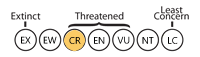
The Poweshiek Skipperling is listed as Endangered under the U.S. Endangered Species Act and Critically Endangered by the IUCN. Fewer than 500 individuals likely remained in the world in 2013. In partnership with many agencies, the Minnesota Zoo’s Prairie Butterfly Conservation Program is studying the reason for their decline.
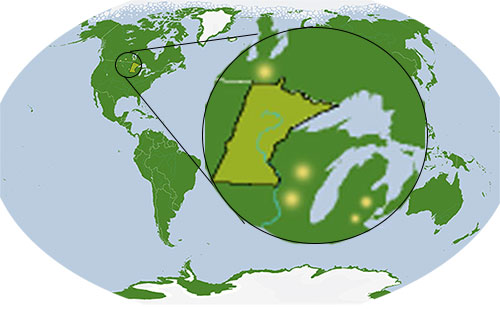
Poweshiek Skipperling Range Map
Where in the World
North America
Habitat
Prairie
Conservation Status
Animal Facts
Adult Wingspan: 1 inch
Lifespan: 1 year. 2 weeks as an adult.
Where at the Zoo
Behind the scenes