Horse
Equus caballus
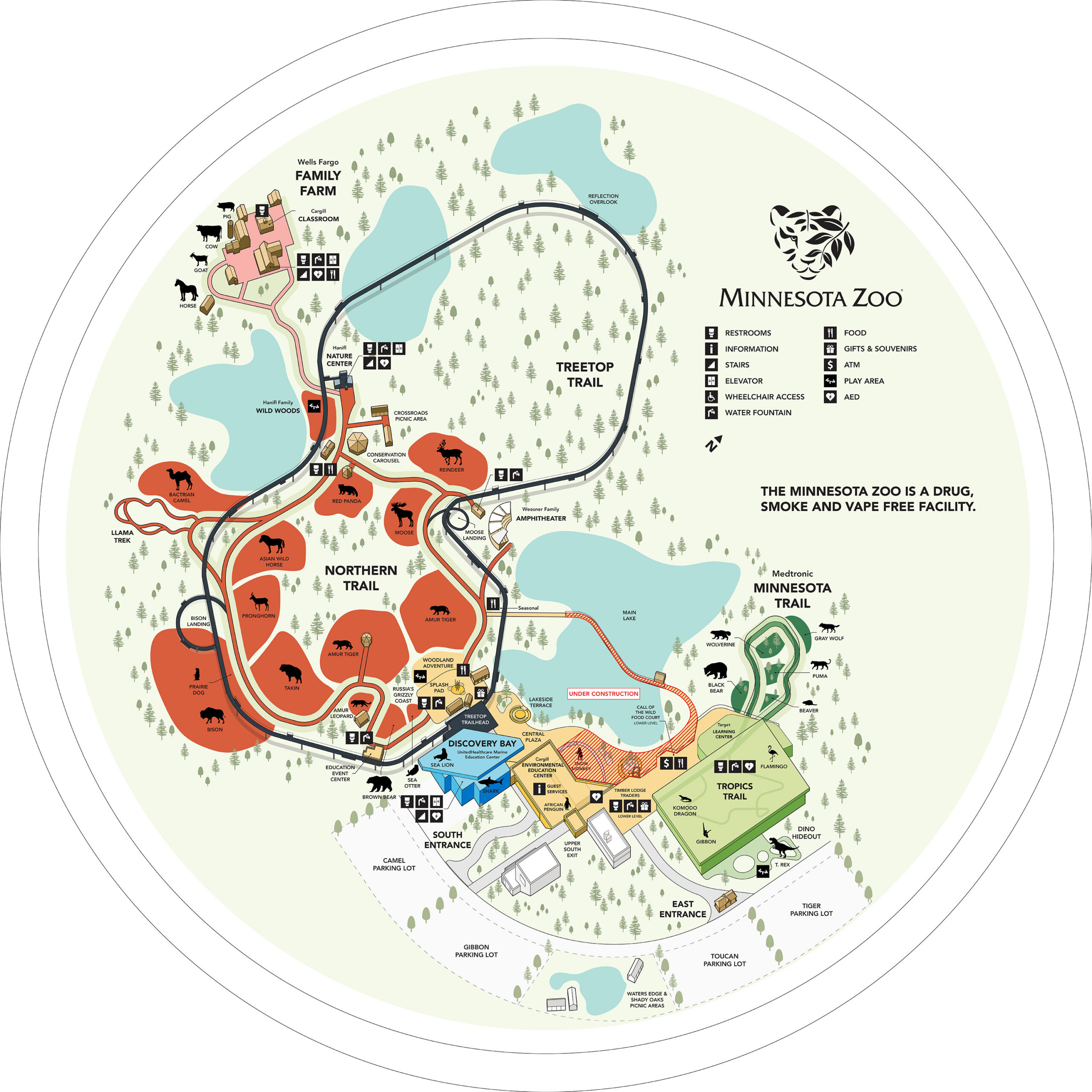
Hooved mammals with barrel-shaped bodies and long legs, horses are equines, along with zebras and donkeys. There are more than 300 domestic horse breeds that descended from wild horses. One wild ancestor, the Asian Wild Horse, can be found along the Minnesota Zoo’s Northern Trail.
What They Eat
With their long necks and specialized teeth, horses spend several hours each day grazing on grasses. Domestic horses generally eat a diet of hay or grass and grain. Horses need about 10-12 gallons of water per day.
Where They Live
Horses live anywhere humans do, except in Antarctica. Different breeds are adapted to different climates. For example, small, woolly Icelandic horses survive in the harsh Arctic tundra, while Arabian horses are suited to the hot desert with their stamina and compact bodies.
What They Do
Horses are social animals that spend time grooming one another. They communicate through body language and vocalizations such as neighs, nickers, squeals and snorts. In the wild, horses live in social bands or herds that typically include 4-10 members.
How They’re Doing
There are over nine million horses in the United States. Most breeds are doing well around the world, but some breeds are rare, such as the American Cream draft horse. The horse’s wild ancestor, the Asian Wild Horse, was nearly extinct and has only recently been reintroduced into the wild.
- Wherever English is spoken, horses are measured in “hands.” One “hand” equals four inches. A horse’s height is measured from the ground to the withers, the point where the neck meets the back.
- When Europeans arrived in the Americas, they brought horses back to the New World. During the Ice Age, horses migrated to Asia, then on to Europe and Africa. Eventually horses went extinct in the Americas. All horses in the Americas today are descended from Eurasian breeds.
- Horsepower measures the power output of something, such as a car engine. Engineer James Watt came up with the term in the late 1700s as a way of explaining how much power could be derived from new-fangled steam engines, compared to a typical horse. The term horsepower is a little misleading because it’s actually about 50% more than the rate an average horse can sustain for a working day.
- With the invention of the engine, the popularity of horses declined significantly. The number of horses worldwide (from draft horses to ponies) decreased as they were replaced with tractors and automobiles for work and transportation.
- Horses will sometimes eat their own manure. This behavior is most often seen in foals from one week to two months of age. It’s not fully understood why horses do this. It could be to promote the growth of good gut bacteria as the foal transitions from mare’s milk to solid food, or for other reasons.
- Wild horse herds are composed of a dominant stallion, several mares and offspring from the last 2-3 years. Bigger herds can occur that include subordinate males, but herds rarely exceed 20 individuals. Young males will sometimes form bachelor herds.
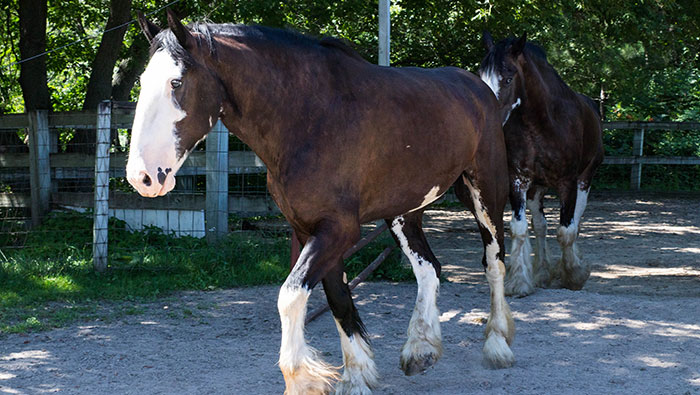
- Clydesdales are a breed of draft horse that was originally developed in Scotland. They are brown and black with distinctive white markings; the brown body and black tail and mane is called bay coloration in horses. The trademark longer white hair on their legs is called feathering. These easygoing, gentle giants typically measure 16-18 hands.