Coyote
Canis latrans
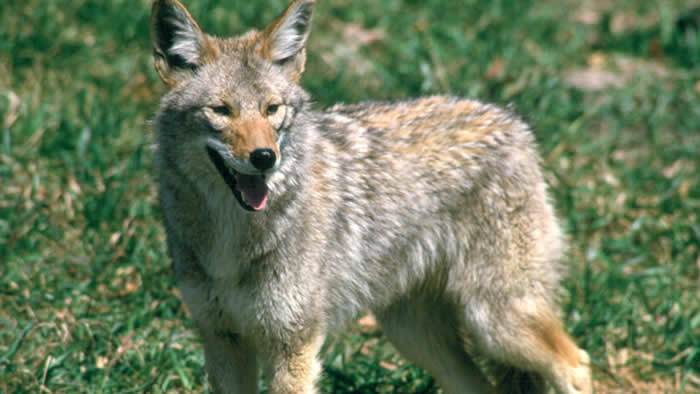
Wily and adaptable, Minnesota’s most abundant large predator does well where humans have changed the landscape. Here they find a booming population of rodents for food and less competition from other predators that have been pushed out.
What They Eat
Rabbits, rodents, insects and other small prey they find easy to catch.
Where They Live
Coyotes live just about everywhere. In Minnesota, this includes prairies, woods, wetlands, and even suburbs and small towns.
What They Do
Coyotes are most active at night and in early morning. They sleep in sheltered areas but use dens when raising their young.
How They’re Doing
In the last century, coyotes have expanded their range across Minnesota and throughout most of the country.
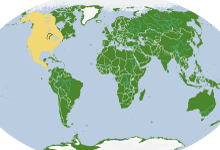
Where in the World
Central America & Caribbean
North America
Habitat
Desert, Prairie/Steppe, Savanna, Scrubland, Temperate Forest/Taiga, Tropical Forest, Tundra, Other (urban areas)
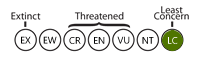
Conservation Status
Animal Facts
Head & body: 3.6 to 4.4 ft
Tail: 16 in.
Height: 1 to 2 ft at shoulder
Weight: 25-40 lbs
Average lifespan: up to 13 years
Taxonomic Category
Mammal, carnivore
Where at the Zoo
| Coyote | Wolf | |
| Length | 3.3 - 4.6 ft. | 5 ½ ft. |
| Weight | 25-40 lbs. | 50-100 lbs. |
| Color | Varying shades of grizzled gray and reddish brown | White to grizzle brownish-gray to black. |
| Facial Features | Narrow face with pointed snout and tall, pointed ears. | Rounded face and snout and smallish, round ears. |
| Tail Position (trot) | Carries tail low or tucked between hind legs. | Carries tail straight out from body. |
| Home Range | 10 sq. miles | 100 sq. miles |
| Social Order | Loosely structured, less stable than wolves. Sometimes hunt in packs, but usually alone or in pairs. | Sophisticated with a close family group. Dominant or alpha male and alpha female. |
| Communication | High-pitched yaps, barks, howls, and wails. Marks using scent. | Howls to assemble pack, pass on alarm, define territory, and locate pack members. Marks using scents. |