Canada Lynx
Lynx canadensis
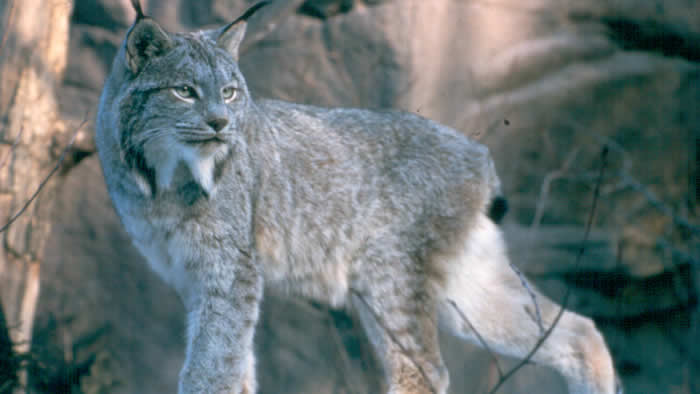
Lynx are well suited to living in snow: large furry feet serve as snowshoes, long legs help them stay above snow drifts, and extra-thick fur keeps them warm and silent.
What They Eat
They mostly hunt snowshoe hares but will also eat birds ad small mammals.
Where They Live
In the northern forests, where their adaptations to snow serve them well.
What They Do
Like other cats, they usually rest during the day, often under cover such as a fallen log or rock ledge.
How They’re Doing
Minnesota used to have the most lynx in the Great Lakes. Numbers dropped to near zero in the 1980s. Only recently have we seen signs of recovery.
Where in the World
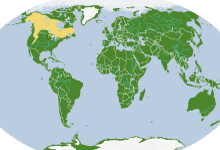
Asia Europe North America
Habitat
Temperate Forest/Taiga Tundra
Conservation Status

Animal Facts
Head & body: 30-40 in.
Tail: 4-6.5 in.
Height: 20-24 in. at shoulder
Weight: 12-24 lbs. (Males are generally larger)
Taxonomic Category
Mammal, carnivore
Where at the Zoo
- Canada lynx are not fast runners. They hunt by stalking and pouncing on their prey. For every one prey caught, 10 may escape.
- Lynx numbers go up and down with the population of snowshoes hares. So protecting lynx means protecting hares.
- Like other members of the cat family, lynx have sharp, retractable claws (they can pull them in). They use their claws for capturing prey, fighting, and climbing trees to escape large predators like wolves.
- Lynx communicate using sounds. They have a wide range of vocalizations from very high pitched to a very low growl.
Things the Zoo's Done/Doing
Canada lynx are typically nocturnal, solitary, and wary of people, so it is difficult to study them in the wild. Researchers from the Natural Resources Research Institute at the University of Minnesota Duluth, have been using innovative methods to track and study lynx in the Great Lakes region of Minnesota. Specifically, they have been investigating lynx distribution, habitat use, abundance, and persistence. To better understand these issues, numerous lynx have been outfitted with radio telemetry and GPS collars to allow researchers to obtain important information about their behavior and activities.
Funding from the Minnesota Zoo’s Ulysses S. Seal Conservation Grant Program has allowed the purchase of additional GPS collars. Minnesota Trail supervisor, Tom Ness, who has also participated in the study, championed this project.