Bali Mynah
Leucopsar rothschildi
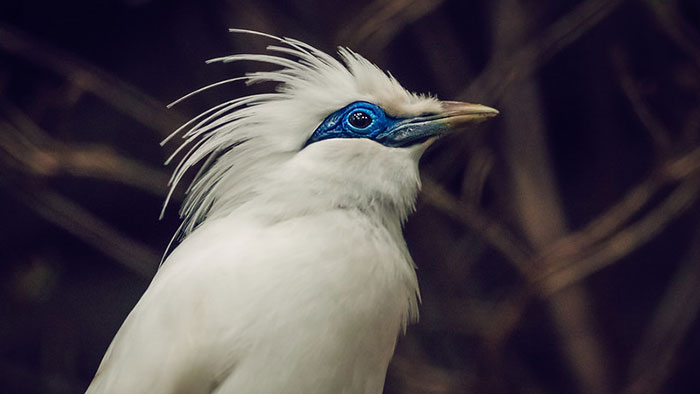
Bali mynas are one of the most critically endangered birds in the world. These striking members of the starling family are mostly white, with black bands on the wings and tail, and a featherless, blue patch around the eyes. Males and females look alike, each with an elegant feather crest on the head.
What They Eat
Bali mynas are omnivores. They eat seeds, fruit, small reptiles and insects such as caterpillars, ants, grasshoppers and dragonflies.
Where They Live
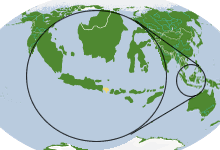
Bali mynas are native only to the northwest coast of the island of Bali in Indonesia. They inhabit open, grassy woodlands, and tend to avoid dense forest.
What They Do
Historically, Bali mynas gathered in flocks of 20-40 birds. During the breeding season, birds pair off to mate. Nests are often built in old woodpecker holes or in natural tree cavities. Two weeks after eggs are laid, two or three chicks hatch. Both parents care for eggs and young.
How They’re Doing
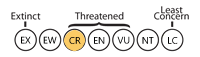
Listed as “critically endangered” by the International Union for the Conservation of Nature (IUCN), the population is declining. The wild population is maintained by the release of captive-bred birds, but there is evidence of wild birds breeding. The greatest threats to Bali mynas are unsustainable, illegal capture for the pet trade and habitat loss.
Where in the World
Asia
Habitat
Island Tropical Forest
Conservation Status
Animal Facts
Body length: 9.8 inches
Weight: 2.4-4 ounces
Lifespan: 15 - 25 years in zoos
Taxonomic Category
Bird
Where at the Zoo
- Scientists first discovered the Bali myna in the early 1900s.
- Bali myna are also known by the common names Bali starling, Rothschild's Mynah, Rothschild's Starling and White Starling.
- The region where these birds are found in Bali is smaller in size than the state of Rhode Island.
- Both sexes of Bali myna sing. Their songs include a wide variety of loud chattering with whistles and piercing, high-pitched notes. Singing is often accompanied by raising the crest and bowing.
- Behaviors used for courtship and aggression are similar.
- Bali myna eggs are teal in color.