Bald Eagle
Haliaeetus leucocephalus
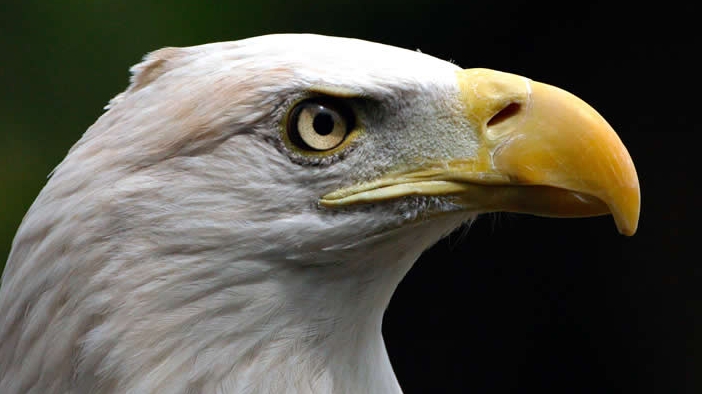
Our nation’s symbol, this powerful bird of prey almost went extinct. It has rebounded in recent years, with the Minnesota-Wisconsin border hosting one of the most successful recoveries.
What They Eat
Fish, ducks, and dead animals (carrion) such as deer.
Where They Live
Forested areas near water. In Minnesota, bald eagles nest mostly in the central part of the state, and in winter they can be found along the Mississippi River.
What They Do
Bald eagles nest and hunt along the waterways. A few migrate, but many prefer to winter in Minnesota, hunting for fish in ice-free stretches of river.
How They’re Doing
Recovering but still protected by law. By 2006, 1100 pairs of bald eagles nested in Minnesota, up from only about 480 in the entire United States just 30 years earlier.
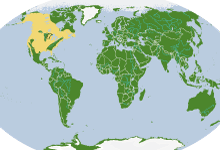
Where in the World
North America
Habitat
River, Lake, Wetland Temperate Forest/Taiga
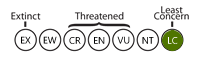
Conservation Status
Animal Facts
Length: 3.5 ft
Weight: 9-14 lbs (females average 25% larger than males)
Wingspan: 6-8 feet
Flying Speed: up to 50 miles per hour
Lifespan: 20-30 years (wild); up to 50 years (captive)
Taxonomic Category
Bird
Where at the Zoo
- Young bald eagles are often confused with golden eagles because of their mottled brown color. There are two easy ways to tell them apart-habitat and plumage:
- Bald eagles are usually found near water. Golden eagles prefer open rangeland. Golden eagles are not native to Minnesota, but may visit parts of the state in winter.
- Young bald eagles lack feathers on their lower legs (tarsi). The white mottling on their head, body, wing linings, or tail feathers appears “dirty” white, rather than clean and crisp like mottling on the golden eagle.
- On June 20, 1782, the bald eagle was voted our national symbol. Today, twelve states include the bald eagle on their official emblems.
- Eagles re-use nests and add to them each year. Well-established nests may grow as large as 10 feet across, 20 feet deep, and weigh over 2 tons!
- Because bald eagles occasionally “pirate” food from other species, Benjamin Franklin thought they were of "bad moral character" and a bad choice for our national symbol. He suggested the wild turkey instead.
- Being called “eagle eye” is a compliment. Like all raptors, bald eagles have keen vision-at least four times that of a person with perfect vision.
- Bald eagles can fly to altitudes of 10,000 feet, and reach speeds of 50 mph when hunting and 100 mph when diving!