Tarpon
Megalops atlanticus
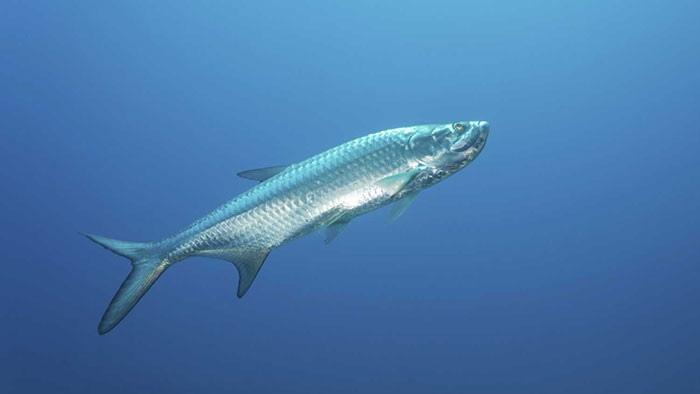
Prized as sport fish, tarpon may grow beyond 6.5 feet in length and weight up to 350 pounds. They are known for their thrashing power and spectacular leaps when hooked on a fishing line.
What They Eat
Juvenile tarpon feed on zooplankton, crustaceans and insects. Adult tarpon diet includes small fish, like sardines and anchovies. They also scavenge for dead fish and eat larger crustaceans, such as crabs and shrimp.
Where They Live
Tarpon are found in shallow tropical and temperate waters along the eastern and western Atlantic coasts. They are also found along the Pacific coast of Panama as they have moved through the Panama Canal. Their range is limited by water temperature. Juveniles will live in inland waters including coastal ponds and mangrove swamps, sometimes even entering freshwater areas. As they mature, tarpon move to deeper, saltier waters, but still remain near shore.
What They Do
Tarpon can live for many years with males maturing at seven years and females at 10 years of age. Ecologically important throughout their life, tarpon function as both predator and prey. As eggs and larva, they add to the food chain base of oceanic plankton. As tarpon grow, they become predators of fish and crustaceans. Large tarpon serve as prey for sharks, alligators and porpoises.
How They’re Doing
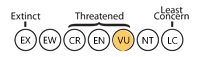
Although there has been no formal assessment of tarpon, evidence suggests that populations of tarpon have declined from historic levels throughout their range. Tarpon numbers are thought to have decreased by over 30% since 1975, but declines may date back as early as the mid-1930s. Tarpon are listed as “Vulnerable.” Despite bans on commercial harvest, recreational harvest is allowed and varies widely throughout its range.
Where in the World
North America, South America, Africa, Europe, Caribbean & Gulf of Mexico
Habitat
Ocean
Conservation Status
Tarpon
Taxonomic Category
Fish
Animal Facts
Body Length: can be over 6.5 feet
Weight: up to 350 pounds
Where at the Zoo
- The largest tarpon caught with tackle was nearly 287 pounds!
- A large female tarpon may lay 12 million eggs, which drift in ocean currents to near-shore areas.
- Female tarpon are usually bigger than males of the same age.
- Tarpon hatchlings are larval, almost transparent, and look more like a clear strip of ribbon than a fish. The eggs and larval young become an important part of the plankton that serves as the base of ocean food chains.
- When they reach about 1.5 inches in length, tarpon metamorphose into tiny versions of their parents complete with prominent silver scales.
- Adult tarpon scales are as large as silver dollars. When they leap from the water, the silver from their scales reflects brightly. This has earned tarpon the nickname “silver king.”
- Tarpon have small teeth for being such big fish. They use their hard, sandpaper-like mouth to swallow prey whole.
- Tarpon are tolerant of a wide range of salinity and oxygen concentrations. When swimming in oxygen-poor water, tarpon can gulp air from the surface.