Baer’s Pochard
Aythya baeri
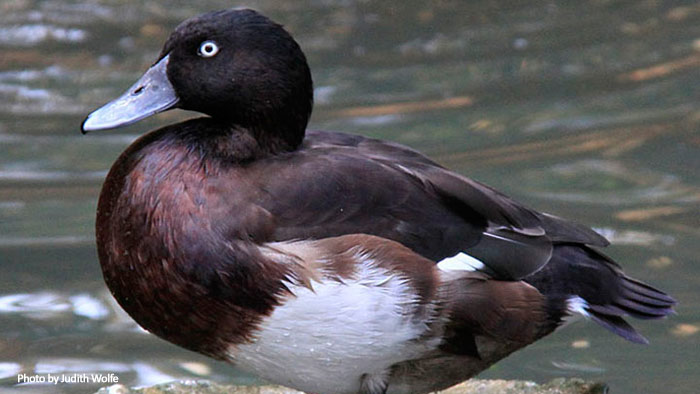
Baer’s pochard are one of the most critically endangered ducks in the world. There are estimated to be less than 300 individuals surviving in the wild. The Minnesota Zoo is taking a central role in working to protect this species.
What They Eat
Baer’s pochard eat aquatic plants, mollusks, frogs, small fish and aquatic insects. They will also feed in rice fields. In zoos, they are fed a high-protein waterfowl pellet, small fish and bugs.
Where They Live
These diving ducks are found in lakes, rivers, streams and wetlands. Historically, Baer’s pochard had a widespread range in eastern Asia. Today, they are found mostly in China, but only in small numbers. They are found as single birds in Russia and Myanmar.
What They Do
Baer’s pochard pair with mates in the winter. In the spring, they nest along shorelines with dense cover. A nest contains 6-10 pale-brown eggs. While females sit on the nest, males usually gather in molting grounds.
How They’re Doing
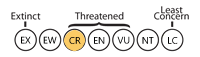
Classified as critically endangered, Baer’s pochard numbers are quickly falling. Scientists are urging a conservation response to bring this species back from the brink of extinction. The main threats are not well understood, but the loss of habitat in breeding and wintering sites is of critical concern, as well as hunting, egg collection, and disturbance for rice agriculture.
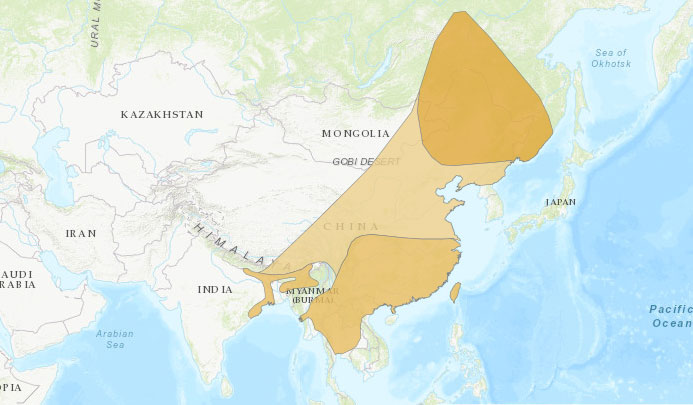
Where in the World
Eastern Asia
Habitat
Lakes, rivers, streams and wetlands
Conservation Status
Animal Facts
Length: 16.1-18.5 inches
Weight: males 2.1 pounds, females 1.5 pounds
Wingspan: 27.6 - 31.1 inches
Lifespan: 10-12 years in human care
Taxonomic Category
Bird
Where at the Zoo
- Baer’s pochard is named after Dr. Karl Ernst von Baer, a Prussian naturalist.
- These ducks are also known by the name Siberian White-eye pochard or green-headed pochard.
- Baer’s pochard tends to be a quiet, non-vocal species, except during courtship.
- Males and females have blackish green heads and necks. Males are larger and brighter in color than females. The green on a male looks metallic in daylight.
- Male’s eyes are white colored with black pupils, but during times of excitement, their black pupils may become so contracted that they seem to disappear. Females have dark eyes.
- These birds tend to be found in pairs or small groups, but they do mix with other diving duck species at their wintering grounds.
- The breeding range of Baer’s Pochard occurs predominantly in China, with small numbers breeding in Russia. More surveys are needed to learn what areas they could be utilizing for conservation protection.
- The wild population is thought to be fewer than 300 individuals.