Southern Three-Banded Armadillo
Tolypeutes matacus
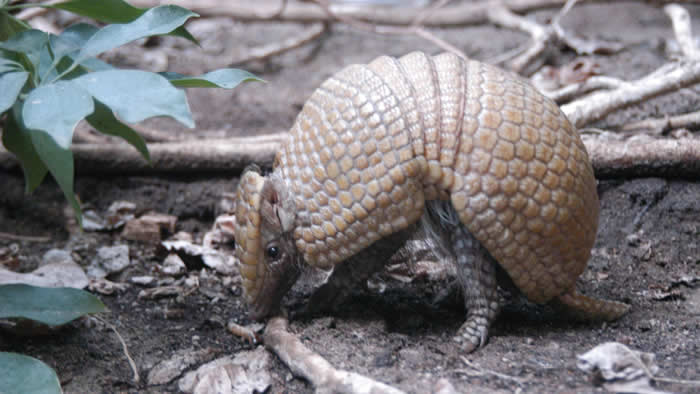
Active at dusk and dawn, the armadillo uses its excellent sense of smell and powerful claws to forage for insects and worms.
What They Eat
The southern three-banded armadillo eats mainly beetle larvae, ants and termites that it gets by probing in the ground, under bark and into nests. It uses its sticky, strap-like tongue to grab a meal.
Where They Live
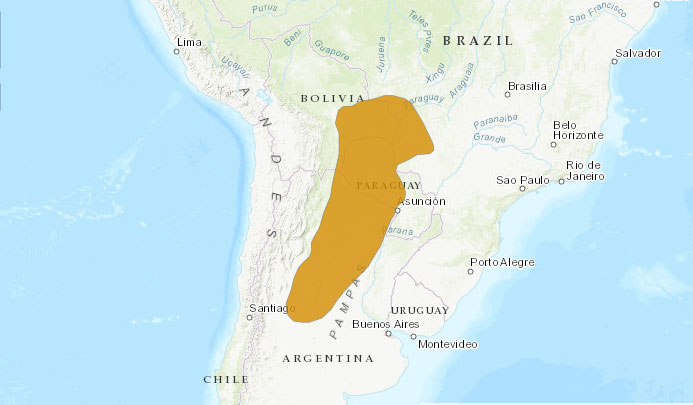
This armadillo is found in grasslands and marshes in South America, including Bolivia, southwestern Brazil, Paraguay and Argentina.
What They Do
This is one of only two armadillo species that can completely enclose itself by rolling into a sphere; the other species is the closely-related Brazilian three-banded armadillo. The sides of the two large shells are free from the skin allowing room for the head, legs, and tail to fit inside when the animal rolls up into a ball. Usually it leaves a small space between a section of its armor, which it forcefully closes on the hand, finger or paw of a would-be predator.
How They’re Doing
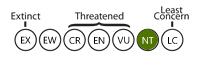
Due to habitat loss and hunting, populations of southern three-banded armadillos are in decline. They are listed as “near threatened” by the International Union for the Conservation of Nature.
Where in the World
South America
Habitat
Grasslands, marshes
Conservation Status
Animal Facts
Length: up to 13 inches long
Weight: 2-3.5 pounds
Lifespan: up to 36 years in zoos
Taxonomic Category
Mammal
Where at the Zoo
- Armadillo head plates are unique to each armadillo, similar to human fingerprints.
- “Armadillo” is a word of Spanish origin, referring to the armor-like covering of these animals.
- An armadillo’s “armor” is made of a series of bony plates covered with a leathery skin. The skin is made of keratin, similar to human fingernails. Most three-banded armadillos have three movable bands, but some have only two bands and others have four.
- Armadillos have simple, cylindrical molars that grow throughout their lives. Their teeth lack protective enamel, so are constantly worn down by the foods they eat.
- The three-banded armadillo is a member of the order Cingulata, along with other armadillos. The closest relatives of armadillos are sloths and anteaters in the order Pilosa. Armadillos, anteaters and sloths all belong in the superorder Xenarthra.
- There are approximately 21 species of armadillo worldwide. All except one North American species, the nine-banded armadillo, live in South America.
- Armadillo species with unusual names include the pink fairy armadillo and the screaming hairy armadillo.
- Unlike most other armadillo species which dig burrows to shelter in, the southern three-banded armadillo hides under a bush or in undergrowth by day. It often uses the abandoned burrows of anteaters.
- The southern three-banded armadillo has a slow reproductive rate, producing only one offspring per year.