Madagascar Teal
Anas bernieri
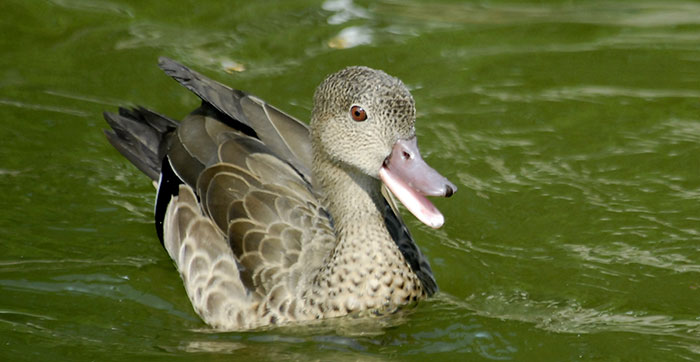
Madagascar teal are also known at Bernier’s teal. They are a species of small, brown duck with a pinkish-grey bill. The wing has a distinctive black patch called a speculum, bordered with white. Males and females look similar.
What They Eat
This duck wades in shallow water and feeds by dabbling—it lowers its head in the water and filters food items through its bill. It has been observed eating small invertebrates and plant matter.
Where They Live
These African waterfowl are found only in a narrow strip along the western coast of Madagascar. They are usually found in coastal lakes, mangrove forests, and estuaries with adjacent wetland or marshes. Annually, they cycle through very particular breeding, molting, and non-breeding habitats.
What They Do
Madagascar teal live in pairs or small groups. When nesting, a pair can be very territorial. They nest in tree holes (cavities) in mangrove trees close to or above the water. A nest may contain 2-10 eggs.
How They’re Doing
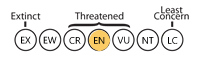
Madagascar teal are endangered. Their yearly cycle depends on a series of habitats which are themselves threatened by timber extraction, prawn production and rice cultivation. Hunting further contributes to the decline of wild populations. The total population is estimated at 1,500-2,500 individuals and is decreasing rapidly.
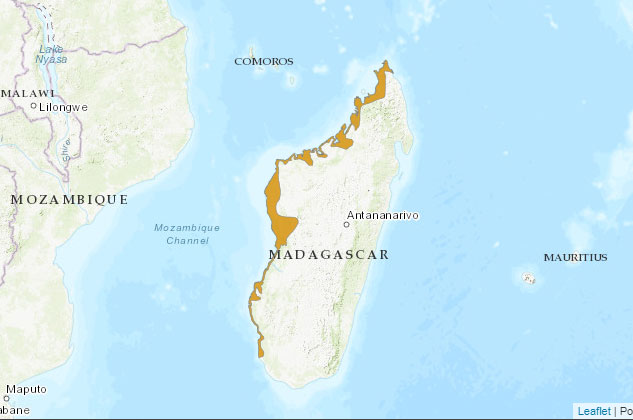
Where in the World
Madagascar
Habitat
Coastal lakes, mangroves and wetlands
Conservation Status
Animal Facts
Body length: 15.75–17 inches
Weight: .6 –.85 pounds
Taxonomic Category
Bird
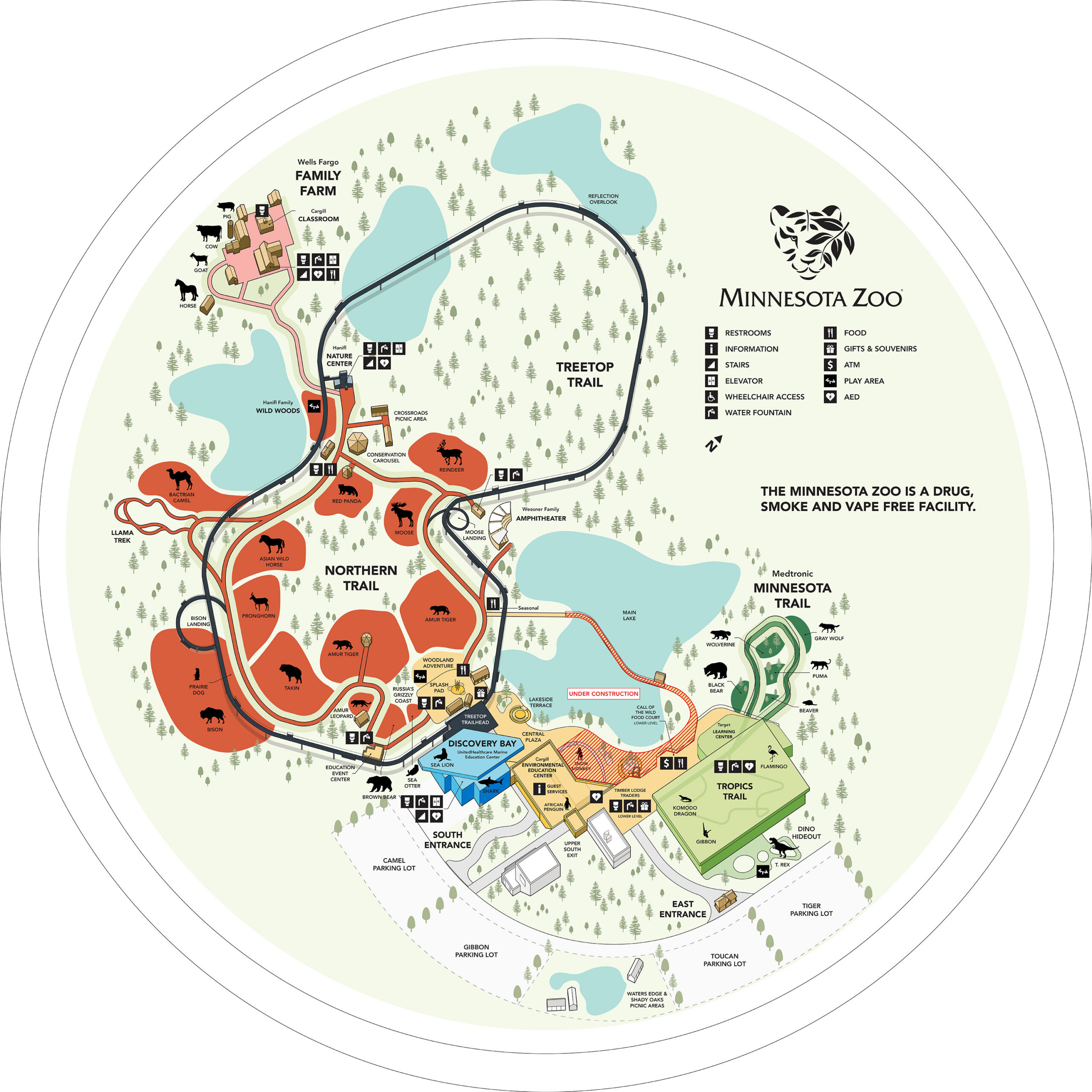
Where at the Zoo
- For being such a small duck, Madagascar teal can defend a surprisingly large nesting site against intruders.
- As is typical with cavity-nesting ducks, Madagascar teal will perch in trees.
- Vocalizations are one of the best ways to differentiate the sexes in Madagascar teal. Short, quiet whistles are the most notable male vocalization and quiet, croaking quacks are the most notable female call.