Malayan Tapir
Tapirus indicus
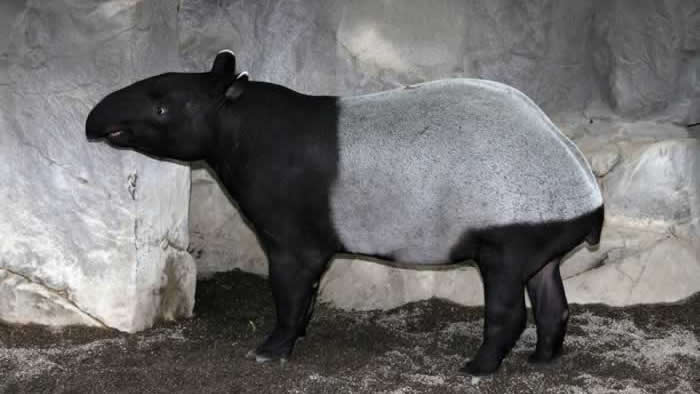
Although Malayan tapirs look more like anteaters or pigs, they are most closely related to horses and rhinoceroses. Their short, fleshy snouts help them sniff their way through the forest and pull vegetation to their mouth so they can browse on leaves and twigs.
What They Eat
Tapirs use their flexible snouts to grasp saplings, leaves, twigs, and aquatic plants. They follow a zigzag pattern when feeding, taking only a few leaves from each plant.
Where They Live
Tapirs love water and are excellent swimmers. They can be found living in grassy areas near lakes and rivers in the dense rainforests of Thailand, Malaysia, and Indonesia.
What They Do
Calves are born after an unusually long gestation of over 13 months. Except for a mother with her offspring, tapirs prefer to live alone or in pairs in the wild. When threatened, these shy animals head for water or run into the bush.
How They’re Doing
One of the most endangered animals in Southeast Asia, Malayan tapir populations are declining due to habitat loss from deforestation for agricultural palm oil plantations. Palm oil is used in many food products, cosmetics, and bath products. You can help save tropical forests that are home to tapirs and other wildlife by purchasing products that use sustainable palm oil. Learn more and pick up a shopping guide by visiting our Act for Wildlife page.
Where in the World
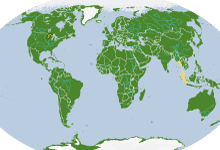
Asia
Habitat
Island Scrubland Tropical Forest
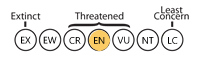
Conservation Status
Animal Facts
Head & body: 5-7 ft.
Height: 28.75-40.5 in (at shoulder)
Weight: 495-600 lbs
Taxonomic Category
Mammal, hoofed
Where at the Zoo
- These 800 lb. mammals are nearly invisible in the wild. Tapirs are nocturnal, and in a moonlit rainforest the contrasting colors break up its body outline in the dense vegetation and shadows.
- The tapir’s excellent sense of smell makes up for its poor eyesight. And although this creature is not closely related to an elephant, it uses its long snout a lot like a trunk.
- In the wild, tapirs have been observed walking under water, consuming aquatic plants like a hippopotamus, and using their snout like a snorkel.
- Malayan tapirs are easily identified by their markings. Except for the white tips on their ears, the hair on their front and rear is black, with a light colored “saddle” across their middle.
Things the Zoo's done/doing
In 2008, the Minnesota Zoo supported the 4th International Tapir Symposium in Mexico. This symposium brought together researchers and zoo staff to promote communication and education about tapir ecology, behavior, care, and conservation.
In captivity the Malayan tapir is managed for breeding purposes by a Species Survival Plan (SSP), which, through the coordinated efforts of several zoos throughout the United States, helps maintain the captive gene pool for the future aid of the wild population. The Minnesota Zoo currently participates in 23 SSP programs, including the Malayan tapir SSP. Since 2001, our zoo has birthed 5 Malayan tapirs that have gone into the SSP pool, and we hope to breed more soon.