Takin
Budorcas taxicolor
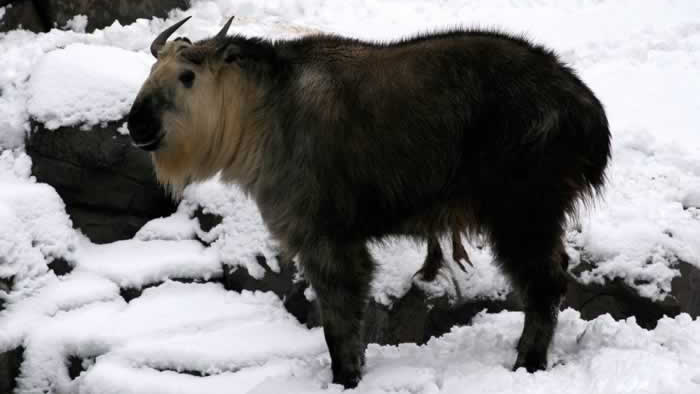
Native to the Himalayan mountains of Asia, goat-like takin have sturdy hooves and strong legs that help them keep their footing on rugged ground. Their thick wool keeps them warm in winter months.
What They Eat
Takin are ruminants—plant-eating animals that chew their cud. They eat more than 100 kinds of plants, including bamboo, rhododendron, and horsetail.
Where They Live
These rugged animals are at home in the cloud-shrouded tropical forests that grow on the steep, rocky slopes of Asian mountains. They live in herds and migrate with the seasons, following new plant growth up the mountains in summer, then gathering at lower altitudes, protected from the cold by their thick wool coats, in winter. They can survive up to timberline at 4,000 to 12,000 feet above sea level.
What They Do
Takin live in small herds made up of females, younger males, and offspring. Older males are often solitary. In summer the herds combine to form gatherings of roughly 100 animals or more. In fall they separate again.
How They’re Doing
Considered a national treasure, takin are protected in China. Although they thrive on wildlife reserves, including land set aside to protect the giant panda, populations have been declining in recent years due to habitat loss and hunting.

Where in the World
Asia
Habitat
Tropical Forest Other (mountain slopes)
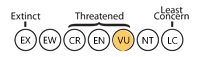
Conservation Status
Animal Facts
Weight: up to 700 lbs
Height: 27–55 in.
Length: 41–84 in.
Horn Length: 25 in.
Taxonomic Category
Mammal, hoofed
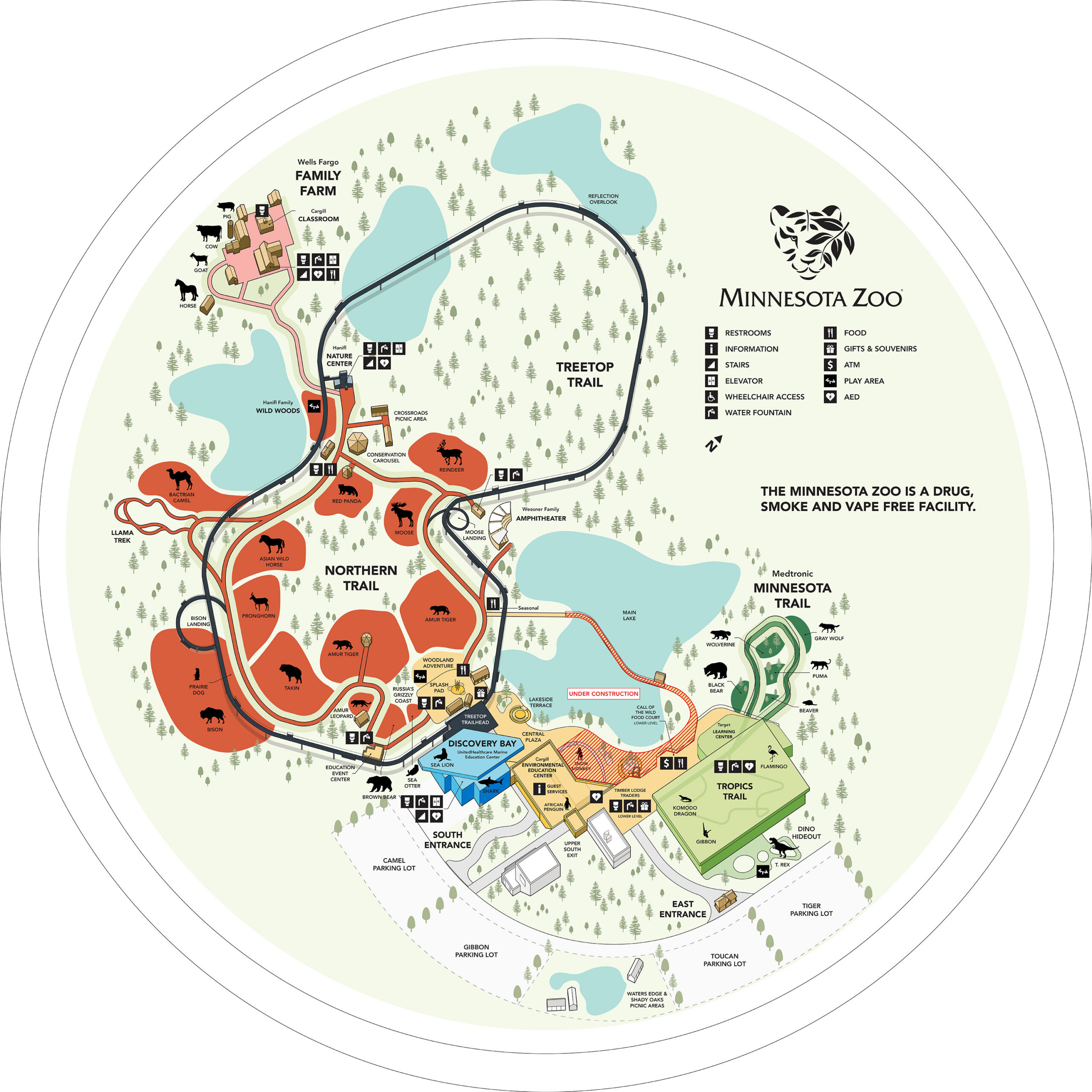
Where at the Zoo
- There are four subspecies of takin. The Minnesota Zoo exhibits the Sichuan subspecies.
- When takin are alarmed they cough to alert others.
- The Shaanxi subspecies of takin is thought to be origin of the Golden Fleece found in Greek mythology.
- Takin hooves help takin move nimbly over rocks.
- Takin are crepuscular, meaning they are most active in early morning and late afternoon.