Great Argus
Argusianus argus
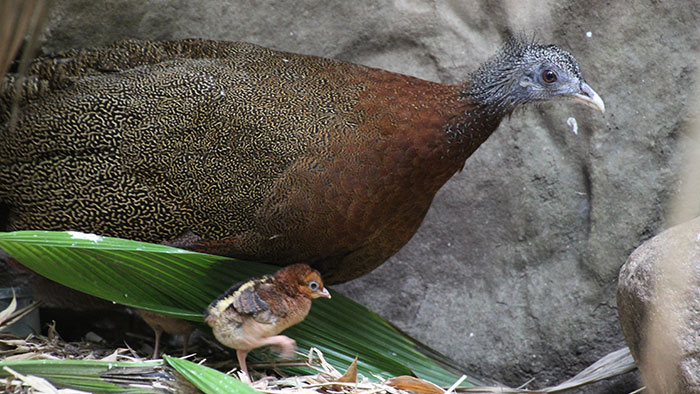
This large pheasant has remarkably long tail and wing feathers with hidden “eyespots” that are revealed during courtship. The male fans these feathers in a spectacular display to attract a female. This display is similar to that of Indian peafowl.
What They Eat
The great argus is an omnivore. It eats fruit, berries, seeds, leafy plant parts, and a variety of insects and invertebrates. At the zoo, it eats a gamebird pellet, fruit, vegetables, mealworms and crickets.
Where They Live
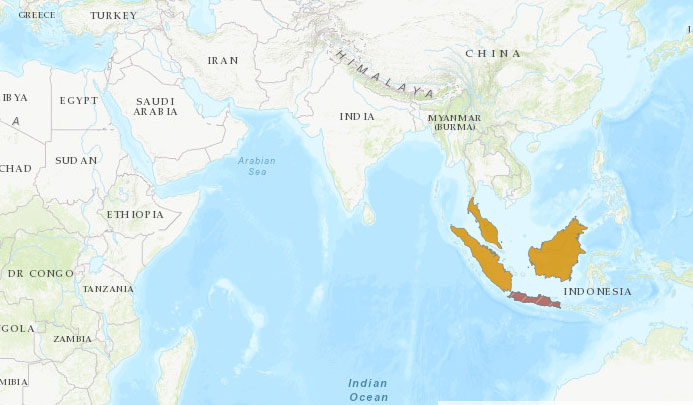
This species is found in the forests of Southeast Asia in the countries of Myanmar, Thailand, Malaysia, Brunei, and Indonesia.
What They Do
The great argus is solitary. During courtship, a male great argus creates a “dancing ground” by clearing an area of all leaves, stones and seeds. He will vocalize and patrol to defend this dancing area. To attract a female, he will first march in a circle while stomping his feet. Then, he will raise and fan his tail and wings to reveal the striking, large eyespots on his feathers.
How They’re Doing
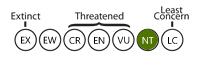
The great argus is suspected to be undergoing rapid population decline in parts of its range. It is classified as “near threatened” due to habitat loss, hunting and trapping.
Where in the World
Southeast Asia
Habitat
Tropical Forest
Conservation Status
Animal Facts
Body length: Males 63 – 78.7 inches; Females 28.3 – 30 inches
Weight: Males 4.5 – 6 pounds, Females 3 – 3.75 pounds
Lifespan: unknown in wild; up to 20 years in zoos
Taxonomic Category
Bird
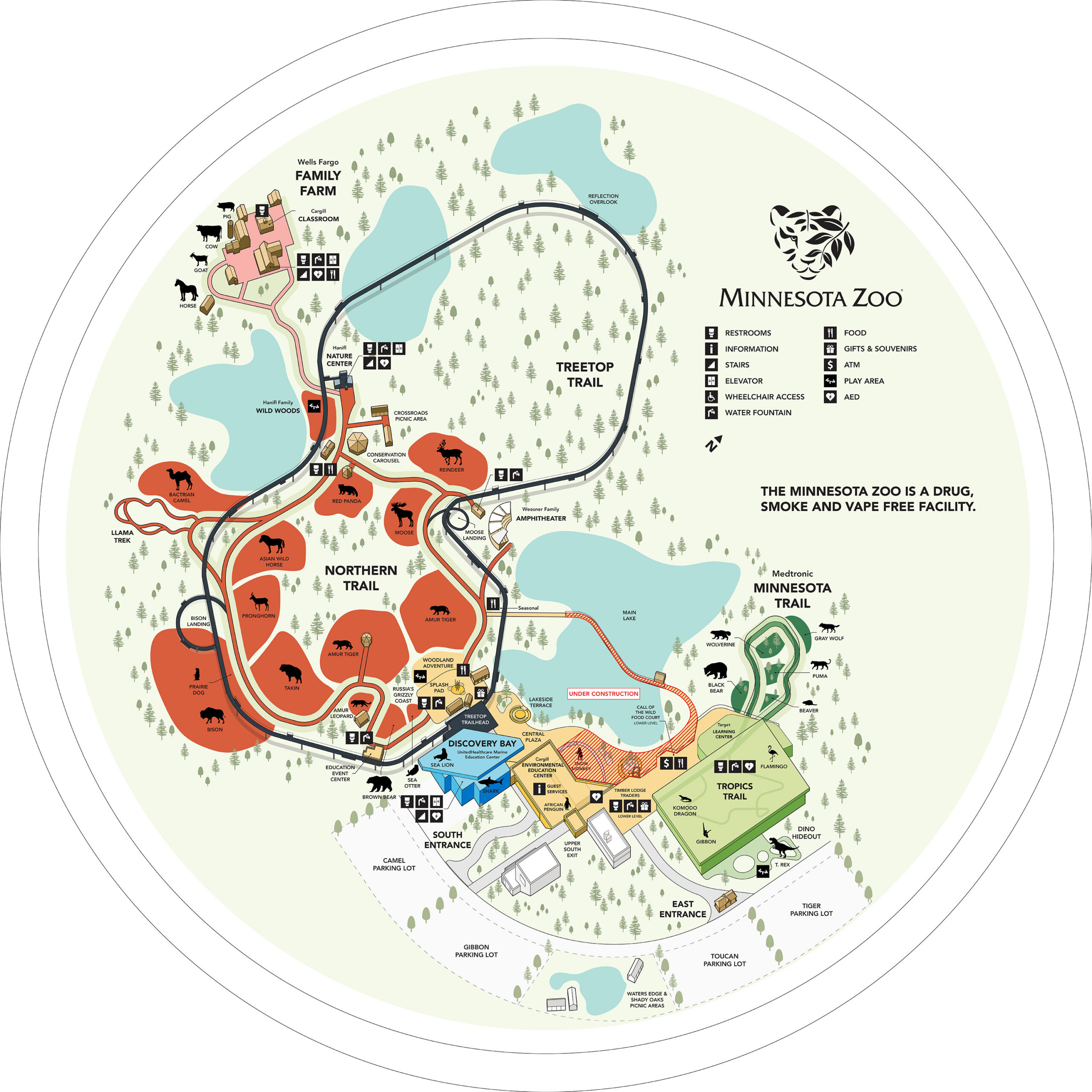
Where at the Zoo
- With reference to the many eyespots on the feathers of the great argus, this bird is named after Argus in Greek mythology. Argus is a monster with one hundred eyes.
- There are two recognized subspecies of great argus – the Bornean and the Malayan.
- The great argus is a reclusive bird. It is more likely to be heard than seen in the wild. Both sexes make a repeated, musical “wow” call. Males will also make a loud “kwow wow” that can be heard over long distances through the thick jungle.
- The male great argus is most likely to boom his call after sunrise, and between sunset and darkness. At the Minnesota Zoo, he will often call between 9:00 and 10:00 in the morning. His calls will sometimes set off a series of calls from other animals along the Tropics Trail, including white-cheeked gibbons, lemurs, rhinoceros hornbills and other birds.
- A typical great argus nest will contain two eggs. The female alone cares for the eggs and chicks.
- The male great argus does not generally participate in caring for chicks. However, at the Minnesota Zoo, young chicks will sometimes follow the male along the walkway through the Tropical Aviary.
- The male great argus’ wings are adorned with iridescent ocelli, or eyespots. His center tail feathers are elongated and can be up to four times longer than the outer tail feathers. He will attain full adult plumage at the age of three years, but his wing and tail feathers will increase in length with each molt until he is six or seven years old.