Asian Wild Horse
Equus ferus przewalskii
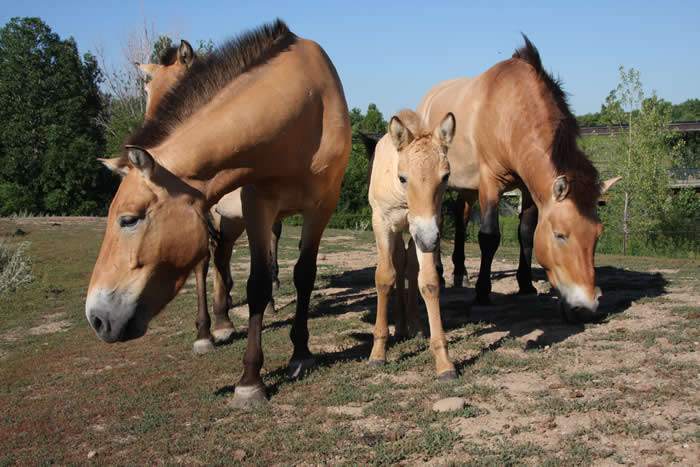
The domestic horse’s closest living wild relative, the Asian wild horse, disappeared entirely from the wild in the late1960s. The Minnesota Zoo and other organizations around the world have cooperated to breed zoo animals and reintroduce their offspring to native lands. Today nearly 500 Asian wild horses again roam the grasslands of China, Mongolia, and Kazakhstan.
What They Eat
Asian wild horses eat coarse, shrubby plants and tall grasses.
Where They Live
The grassy steppes of Eurasia are the Asian wild horse’s historic range, though in recent years humans have forced it to the borders of the stony, sandy Gobi desert.
What They Do
Asian wild horses live in small herds, with a stallion, several mares, and young animals traveling together as they roam the grasslands in search of food to eat.
How They’re Doing
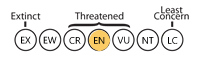
In the 1960s, Asian wild horses disappeared entirely from the wild. Since then, people have worked to preserve habitat and reintroduce animals from zoos to the protected lands. As of 2014, there are about 500 Asian wild horses living in their native habitat in the wild.
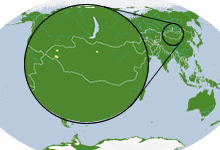
Where in the World
Asia
Habitat
Desert Prairie/Steppe
Conservation Status
Animal Facts
Weight: 550–750 pounds
Height: 4½ feet at the shoulder
Length: 8½–9½ feet
Taxonomic Category
Mammal, hoofed
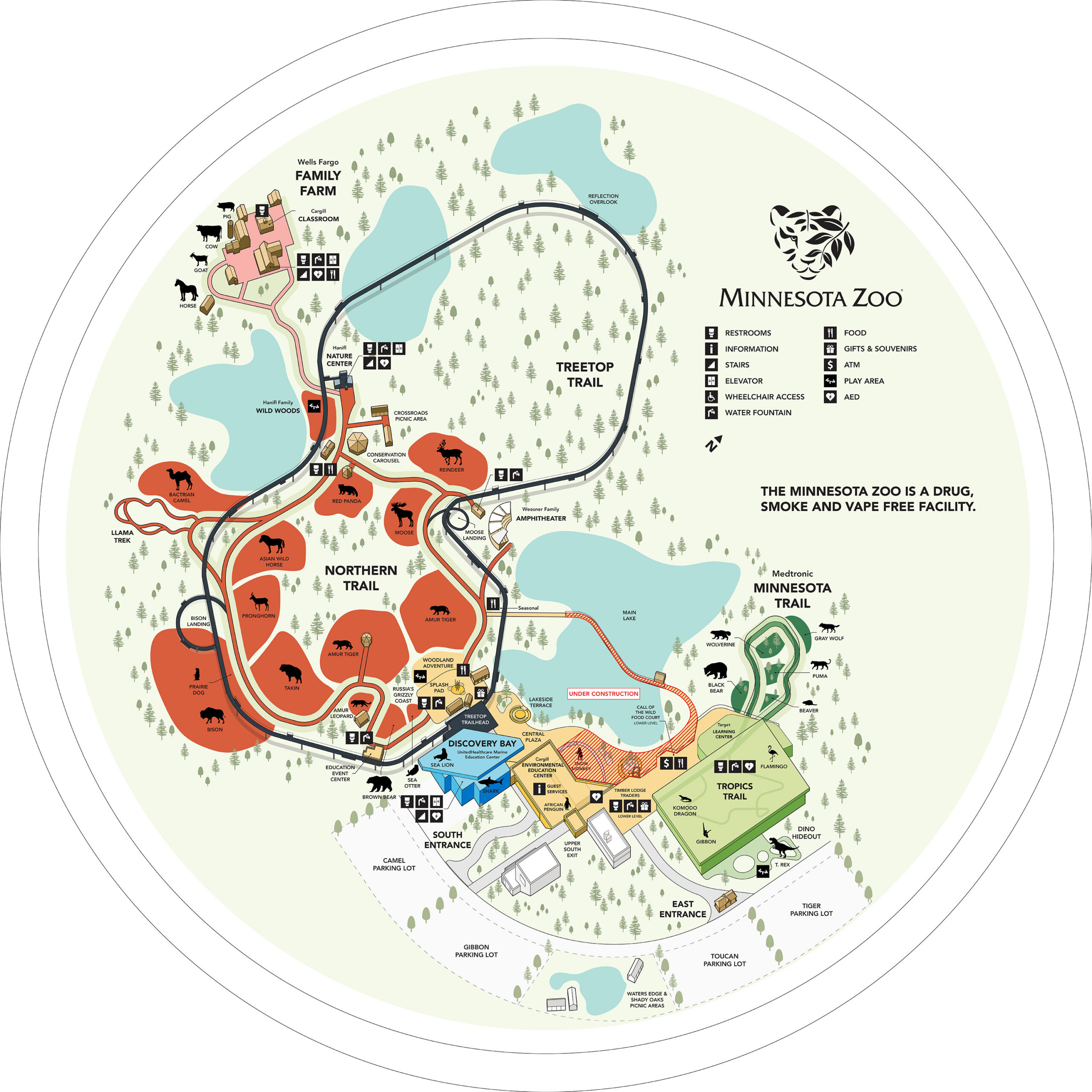
Where at the Zoo
- Asian wild horses have 66 chromosomes, two more than domestic horses. They can successfully interbreed with domestic horses to produce young with 65 chromosomes.
- Unlike domestic horses, Asian wild horses shed their mane and tail once a year.
- All Asian wild horses alive today are descended from 13–14 horses that were in captivity when the species became extinct in the wild.