White-cheeked Gibbon
Nomascus leucogenys
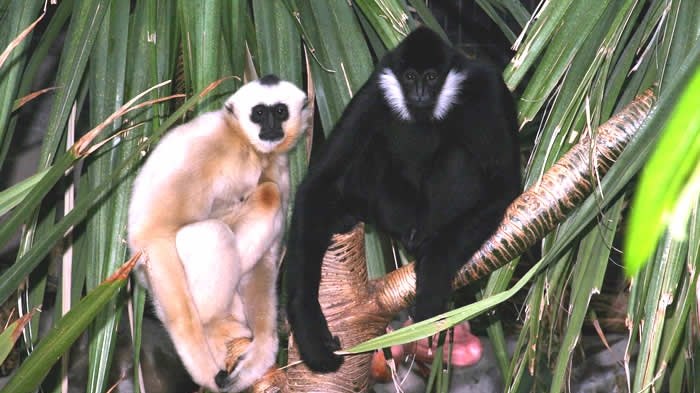
White-cheeked gibbons are one of eleven species of gibbon and critically endangered. These long-armed apes are made for life in the trees, suspending their bodies and swinging easily from one hold to another. Instead of grasping, their hands form a loose hook around branches, allowing them to move swiftly through the canopy.
What They Eat
Hanging suspended from even the thinnest branches, gibbons are able to reach their favorite food: fruit. Figs and other fruit make up most of their diet, but they will sometimes eat leaves, buds, flowers, and occasionally insects, eggs, and young birds.
Where They Live
Seldom coming to the ground, these small apes prefer the upper canopy of their lowland rainforest habitat in Laos, Vietnam, and extreme southeastern China. With long arms, they swing effortlessly from branch to branch, as if on a treetop highway.
What They Do
Gibbons live in small family groups made up of a mated pair and their young offspring. Early in the morning, the group often “sings” in unison to claim their feeding area. Instead of physical conflict, the adult pair defends its territory with a loud vocal duet that can be heard for miles through the forest.
How They’re Doing
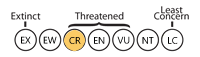
White-cheeked gibbons are critically endangered. Their habitat is disappearing due to logging. Poaching and capturing young gibbons for the illegal wildlife trade also threaten their survival.

Where in the World
Asia
Habitat
Tropical Forest
Conservation Status
Animal Facts
Length: 1.5-2.0 ft
Weight:11-18 lbs
Lifespan: 35-40 years in human care
Color: black (males); buff (females & young)
Taxonomic Category
Mammal, primate
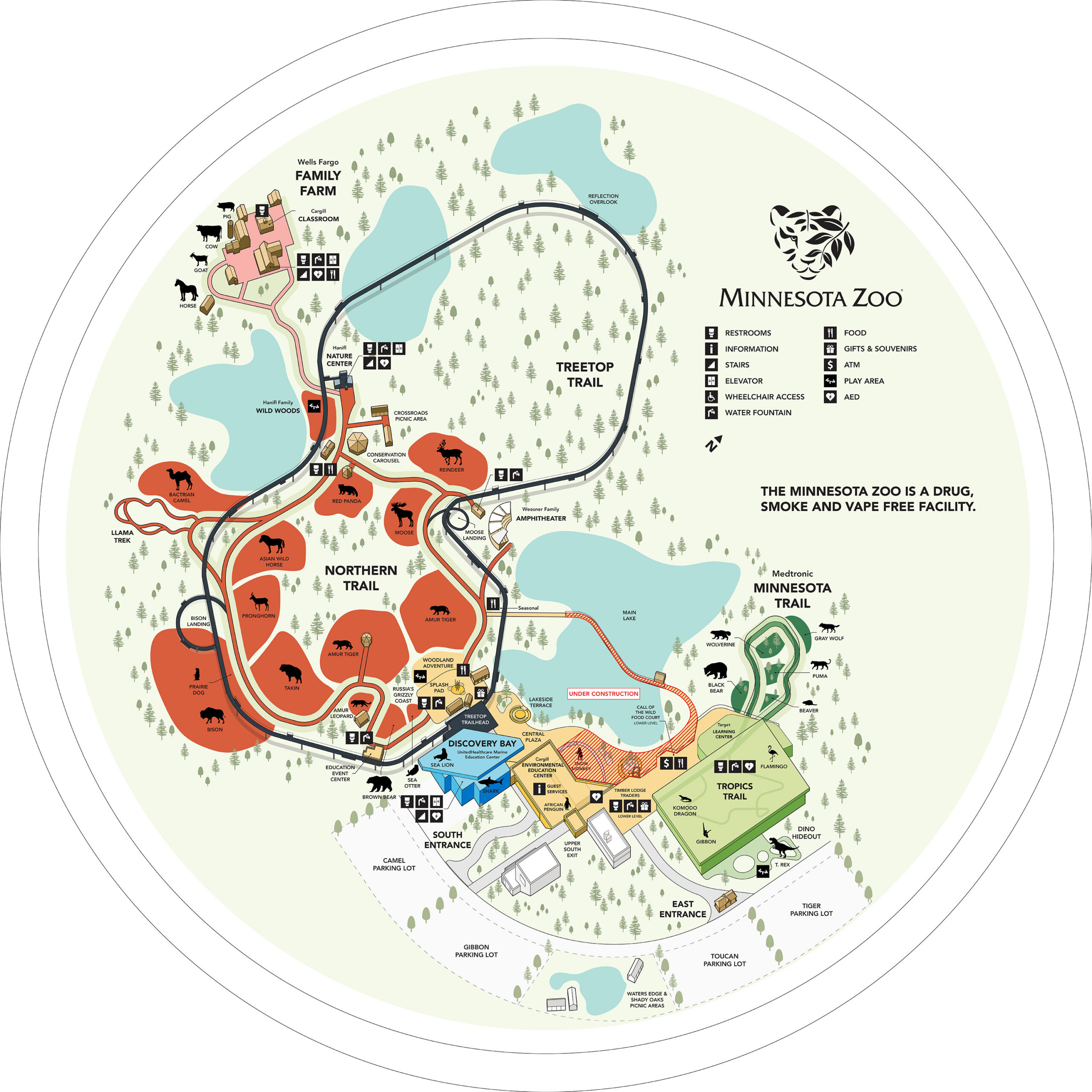
Where at the Zoo
- Gibbons are not monkeys, they’re small apes. Apes don’t have tails while monkeys do. They also have a flatter, more human-like face, larger bodies, and their young develop more slowly than other primates.
- Gibbons avoid crossing water, and major rivers usually separate each gibbon species in the wild. To drink, they dip their hands in water or rub their fur against wet leaves, then slurp up the water.
- White-cheeked gibbons “sing” to announce their presence to neighboring gibbon families and to strengthen their own family bonds. These “great calls” are a family affair, with the adult pair singing in a loud, melodic duet and their juvenile offspring joining in to practice the song.
- It’s easy to tell who’s who with an adult pair of White-cheeked gibbons. As with three other species of gibbons, the males and females are different colors. Male White-cheeked gibbons are black with white cheek patches, while females are buff with a black spot on the top of the head.
- When White-cheeked gibbons are infants, they are colored to match mom, which is fairly effective camouflage. When they reach six months of age, they turn black like their dad. Females turn back to buff when they reach maturity.
Things the Zoo's Done/Doing
People are working to save gibbons in Minnesota and around the world. The former Minnesota Zoo Conservation Director, Ron Tilson, spent two and a half years studying the social behavior of the Mentawai Island gibbons as part of his doctoral thesis. The focus of his research was how gibbon families form and how their unique calls help families bond and maintain their territories.
The Minnesota Zoo is a member of the Gibbon Species Survival Plan (SSP), which manages all species of gibbons in North American zoos. When the zoo opened in 1978, its first gibbon pair had been orphaned in the wild, still a common fate for young gibbons. Representing wild genes, they were very important to increasing gene diversity in zoos. Sine 1981, this pair has successfully birthed 4 gibbons that have gone into the SSP pool. Their legacy lives on through cooperative breeding efforts in zoos across the country.