Atlantic Reef
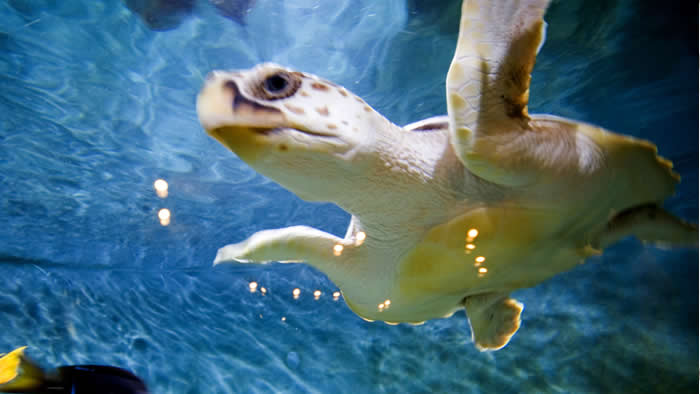
Coral reefs are the “rainforests” of the sea. They support a tremendous diversity of species, including top predators like sharks, rays, eels, and sea turtles. Predators play an important role in reef communities by controlling the population and behavior of prey animals (especially herbivores) living farther down on the food chain.
What They Eat
Predators at the top of the reef food chain feed on other animals living in the reef community—often for short periods at night. Many stalk, ambush, or use speed to pursue their prey—and have sharp pointed or blade-like teeth, adapted for seizing and holding prey and for piercing and tearing flesh.
Where They Live
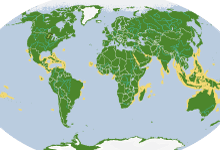
Coral reefs grow in shallow, warm water, usually near land. Small predators inhabit holes and crevices in the reef’s structure. Larger predators live in the open ocean, on the ocean’s floor, or near shore, and only patrol the reef to feed. In the Atlantic Ocean, coral reefs can be found off the coast of Florida to the Caribbean, and down to Brazil.
What They Do
The coral reef is an intricately balanced system where all plants and animals fill a special niche and serve a specific function. Top predators keep reef communities healthy by preventing population explosions of species farther down the food chain. Many also act as scavengers and eat weak organisms.
How They’re Doing
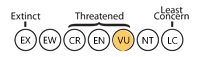
Reefs and their complex communities are under threat due to a variety of natural and human disturbances including coastal development, destructive fishing practices, pollution, climate change, and invasive species. All seven species of sea turtles are currently endangered, as are dozens of species of sharks and other large predatory fishes. The U.S. Fish and Wildlife Service also lists two species of corals, Elkhorn and Staghorn, as endangered.
Where in the World
Central America & Caribbean
North America
South America
Habitat
Ocean
Conservation Status
Sandtiger Shark
Tarpon
Atlantic Ridley Sea Turtle
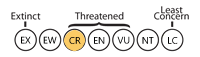
Atlantic Goliath Grouper
Green Sea Turtle
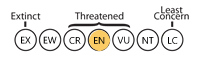
Taxonomic Category
Amphibian/Reptile Fish/Shark
Where at the Zoo
- The “wingspan” (disc-size) of a southern stingray can reach up to 5 feet.
- Green sea turtles can stay under water for as long as five hours. Their heart rate slows down to conserve oxygen.
- Green moray eels are really blue. Their bodies are coated with a yellow-colored slime that makes them look green. The slime helps protect their skin from the jagged surface of the caves and crevices where they hide.
- Sharks and rays don’t have bones. Their skull, spine, and fin supports are made of cartilage, the same lightweight, flexible material found in the bendable parts of a human’s nose and ears.
Things the Zoo's Done/Doing
In 2017, Christoph Noetzli, aquarist at the Minnesota Zoo, joined SECORE International and traveled to the Caribbean island of Curacao to assist with the ongoing efforts to restore their reefs. SECORE is a global organization that joins coral biologists and public aquarium professionals to research and implement the most efficient strategies in coral reproduction and reef restoration.
While in Curacao, Christoph and fourteen other aquarists from around the world collected coral spawn during multiple night dives. In a ten day period, tens of thousands of coral embryos were created through fertilization in the lab. These embryos then settled on to ceramic tiles and were planted back out on to the reef. This process of spawn capture, fertilization, and outplanting allows for the reef to regrow with healthy and genetically diverse corals.
In 2018, the Minnesota Zoo became became an official sponsor of SECORE International and is proud to support their efforts in restoring coral reefs. SECORE conducts fieldwork in Curacao, St. Croix, Bahamas, Mexico, Philippines, and Guam.
Christoph’s participation in the Curacao workshop was made possible by the Minnesota Zoo’s Ulysses S. Seal Conservation Grant Program.